According to latest research by Growth Market Reports, the global cryogenic electronics market size stood at USD 2.64 billion in 2025, driven by significant advancements in quantum computing and the growing demand for ultra-low temperature electronics across research, industrial, and healthcare applications. The market is poised for robust expansion, registering a CAGR of 9.6% during the forecast period. By 2034, the cryogenic electronics market is forecasted to reach USD 6.10 billion, reflecting the accelerating adoption of cryogenic technologies across multiple sectors. This growth trajectory is underpinned by rising investments in quantum technologies, expanding applications in medical imaging, and the critical role of cryogenic components in space exploration and advanced scientific research.
The cryogenic electronics market is gaining attention as industries explore technologies that operate reliably at extremely low temperatures. Cryogenic electronics refers to electronic components, circuits, and systems designed to function in environments where conventional electronic performance may be limited by heat, electrical resistance, or signal interference. These technologies are increasingly relevant to quantum computing, scientific research, aerospace systems, advanced communications, and specialized computing infrastructure.
Key Drivers
Growing Demand for Quantum Computing
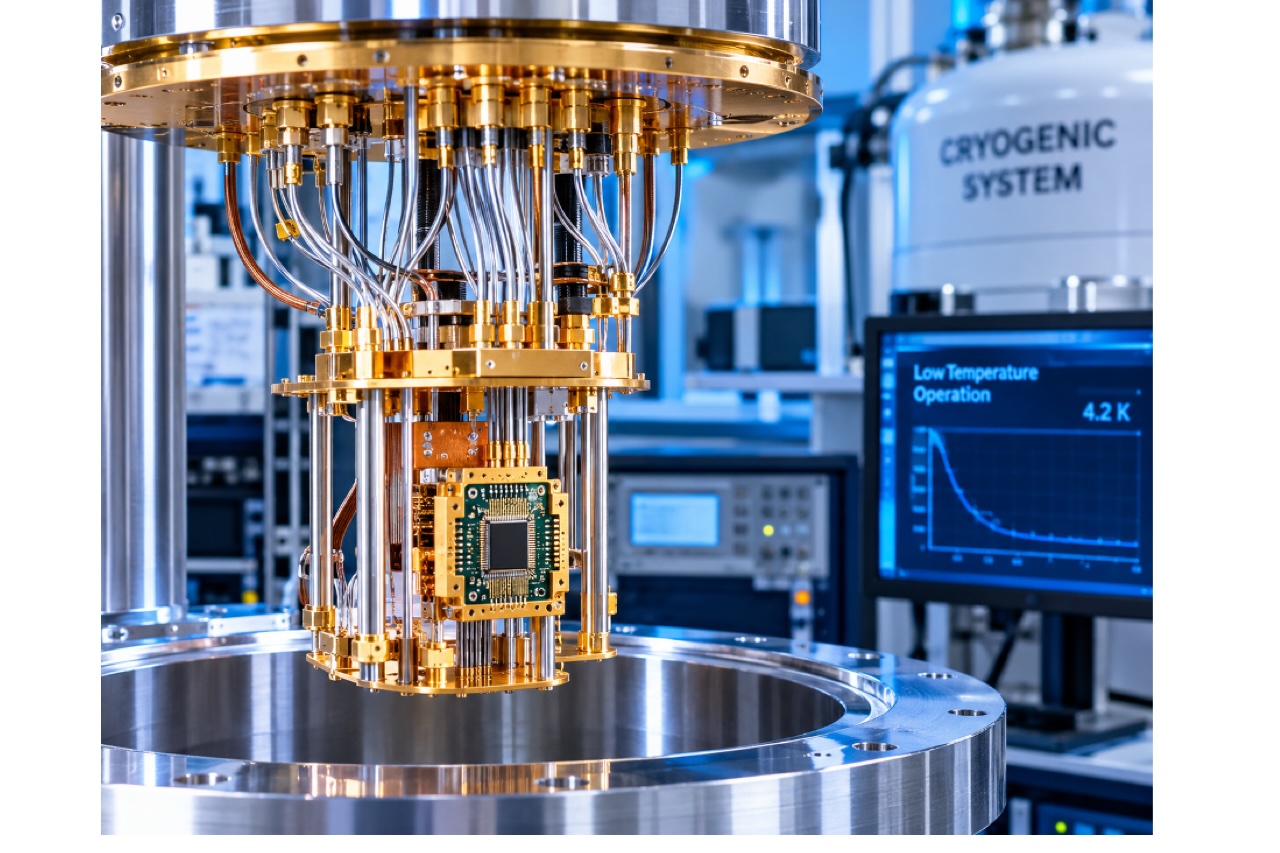
Quantum computing is an important application area for cryogenic electronics. Many quantum computing architectures require carefully controlled low-temperature environments to preserve the behavior of quantum bits and reduce unwanted interference. Cryogenic control circuits, low-noise amplifiers, and specialized signal-processing components help manage communication between room-temperature computing equipment and quantum processors.
As research institutions and technology developers work to improve quantum system performance, the need for compact, energy-efficient, and reliable cryogenic electronic components is increasing. Continued development in this field may create opportunities for component manufacturers and specialized system designers.
Expansion of Scientific and Aerospace Applications
Cryogenic electronics also supports scientific instruments that require accurate measurements under demanding operating conditions. Research laboratories use low-temperature electronic systems in experiments involving superconductivity, particle physics, and highly sensitive detection technologies. Aerospace applications may benefit from electronics engineered to withstand extreme thermal environments and stringent performance requirements.
These specialized applications encourage ongoing research into materials, circuit architectures, and packaging methods that can maintain signal integrity and operational stability.
Major Challenges
Complex Engineering and Manufacturing Requirements
Designing electronics for cryogenic environments involves challenges that differ from those encountered in conventional semiconductor manufacturing. Materials can behave differently at extremely low temperatures, affecting electrical characteristics, thermal expansion, and component reliability. Engineers must account for these changes during circuit design, testing, and validation.
Manufacturers also need specialized equipment to evaluate components under controlled temperature conditions. These requirements can increase development costs and extend product qualification timelines, particularly for applications where reliability and precision are essential.
Thermal Management and System Integration
Although cryogenic environments can improve certain electronic properties, maintaining them requires carefully engineered cooling systems. Heat generated by electronic components, wiring, and external connections can affect temperature stability. Integrating control electronics with cryogenic hardware therefore requires close coordination between thermal engineers, semiconductor designers, and system developers.
Reducing cooling demands while maintaining reliable performance remains an important technical objective for the industry.
Emerging Trends
Advancements in Cryogenic Integrated Circuits
The development of cryogenic complementary metal-oxide-semiconductor (Cryo-CMOS) technology is an important trend shaping the market. These circuits are engineered to function at low temperatures and may help bring control and processing functions closer to quantum devices. Such integration can reduce dependence on extensive room-temperature wiring and support more efficient system architectures.
Miniaturization and Improved Signal Processing
Manufacturers are focusing on compact electronic components that deliver precise signal amplification, improved noise performance, and dependable operation in demanding environments. Advances in superconducting circuits, cryogenic sensors, and specialized interconnects are helping researchers develop systems that support increasingly complex experiments and computing platforms.
Opportunities Across Major Application Areas
Healthcare and Medical Imaging
Medical imaging technologies provide another application area for cryogenic electronics. Certain imaging systems use superconducting magnets and specialized electronic components to support accurate measurements and stable operation. Improvements in low-noise detection and signal processing can contribute to the development of more sophisticated diagnostic and research equipment.
Space Exploration and Astronomy
Cryogenic electronics can support space-based instruments, radio astronomy, and scientific payloads that require highly sensitive detection capabilities. Low-temperature amplifiers and electronic components can help capture faint signals that might otherwise be difficult to distinguish from background noise. Continued investment in space research and advanced sensing technologies could create additional demand for specialized systems.
Competitive Landscape
Lake Shore Cryotronics
Oxford Instruments
Bluefors
Cryomech
Quantum Design
Montana Instruments
Bruker Corporation
Sumitomo Heavy Industries
STMicroelectronics
Intel Corporation
Future Outlook
The future of the cryogenic electronics market will depend on the ability of manufacturers to improve scalability, energy efficiency, reliability, and integration. As quantum computing and advanced scientific instrumentation evolve, demand may increase for specialized circuits capable of managing signals and processing information under extreme temperature conditions.
However, broader adoption will require solutions to technical challenges involving thermal management, manufacturing complexity, component compatibility, and system costs. Companies that prioritize research, robust product design, and scalable manufacturing processes may be better positioned to address emerging requirements.