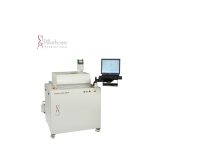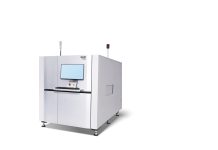

Koh Young Technology, the industry leader in True 3D measurement-based inspection solutions, is celebrating an important customer training milestone as Ray Welch, Sr. Applications Engineer at Koh Young America, recently delivered his 100th SPI Level 2 Print Process training class. More than a training milestone, the achievement represents an accumulated body of experience helping manufacturers understand what their solder paste inspection (SPI) data is telling them and how to use that information to improve the printing process.
Welch often reinforces a simple message with the engineers and technicians he trains: “SPI reveals the sins of the print process.” Behind the memorable phrase is an important principle. True 3D SPI does more than identify unacceptable solder paste deposits. Its measurement data can expose variation, trends, programming issues, and upstream process conditions that might otherwise remain hidden. Learning to recognize and interpret those signals is central to Welch’s approach.
Welch joined Koh Young America in April 2016 after working with OnCore/NEO Tech, where his experience included supporting SPI and solder paste printing processes as part of the Corporate Process Engineering team. He has since applied that background to customer engagements focused on more effective SPI implementation, detailed data analysis, process characterization, and print-process improvement.
That technical background is complemented by something equally valuable: repeated exposure to real production environments. The three-day engagements have now been delivered at more than 100 customer sites, spanning the United States, Mexico, Canada, and Thailand, as well as at Koh Young headquarters.
Through those engagements and his broader work with customers, Welch has developed a unique perspective on how manufacturers actually use SPI. Each visit provides insight into recurring knowledge gaps, misunderstood fundamentals, and practices that can develop as responsibilities change, knowledge is passed between colleagues, or operators and engineers learn systems largely through experience.
Addressing those gaps is a central objective of the three-day course.
“SPI provides an incredible amount of information about the printing process, but the real value comes from knowing how to interpret and act on that information,” said Welch. “The goal of the class is to connect what the SPI is measuring with what is actually happening at the printer. When people understand that relationship, they can make better decisions and improve the process instead of simply reacting to defects.”
Welch’s SPI Level 2 Print Process training goes well beyond basic machine operation and programming. Approximately half of the three-day engagement is classroom-based and half is hands-on work on the factory floor, primarily with process engineers and technicians. Participants take a deeper dive into SPI results and data analysis, process characterization, robust SPI programming, print-process troubleshooting, and printing best practices.
A central theme is moving beyond the use of SPI as simply a “Go-No Go” inspection system. Rather than focusing only on defect calls, Welch emphasizes parametric measurement data and the information it provides about print-process capability, variation, and emerging trends. Using Koh Young’s SPC Plus tools, participants learn to examine production data and relate the measurements back to conditions at the printer.
Participants also apply those concepts to actual production. Assemblies of interest can be selected for analysis, the current print process reviewed, and the “Print + SPI issues of the day” investigated as part of the hands-on portion of the engagement. The objective is to move from reacting to individual defects toward identifying the process conditions behind them and developing data-driven recommendations for improvement.
The approach is a natural extension of Koh Young’s leadership in solder paste inspection. True 3D measurement-based SPI provides objective data about solder paste deposits, but realizing the full value of that information requires understanding how to interpret it and apply it to the printing process. Welch’s training is designed to help bridge that gap.
Importantly, the learning works in both directions.
Every class and customer visit gives Welch another opportunity to see how SPI is being applied in production. Questions, recurring misunderstandings, unusual applications, and process issues encountered in the field become the basis for new topics, examples, and clarifications within the course.
“The class today is not the same class I taught when we started,” Welch added. “Every customer visit teaches me something about where people need more explanation or where there may be a misunderstanding. I continually update the material based on what I see in the field, which keeps the training focused on the problems manufacturers are actually facing.”
After more than 100 engagements, that continuous feedback has created a curriculum shaped by more than inspection technology and printing theory. It incorporates lessons gathered directly from manufacturing floors and the real-world challenges facing the people responsible for maintaining a capable printing process.
The milestone also reflects Koh Young America’s broader commitment to customer education. As inspection technology generates increasingly detailed production data, the ability to understand and use that information becomes just as important as collecting it.
For Koh Young, market-leading SPI technology is only part of the equation. Helping customers understand the measurements, recognize process variation, and apply that knowledge to optimize the printing process extends the value of inspection well beyond the machine itself.
About Koh Young Technology, Inc.
Koh Young helps manufacturers prevent defects, stabilize processes, and increase throughput. Since 2002, the company has led True3D™ measurement-based metrology and inspection, beginning with the industry’s first 3D solder paste inspection system using patented dual-projection Moiré technology. Building on that foundation, Koh Young addresses complex applications including machined parts, press-fit and through-hole pins, conformal coatings, dispensed materials, and semiconductor packaging. A continuous innovation mindset and a customer-focused R&D approach underpin its leadership. With global operations and regional teams, Koh Young provides local support, training, and process expertise that turn inspection data into decisive, closed-loop action for a smarter factory.