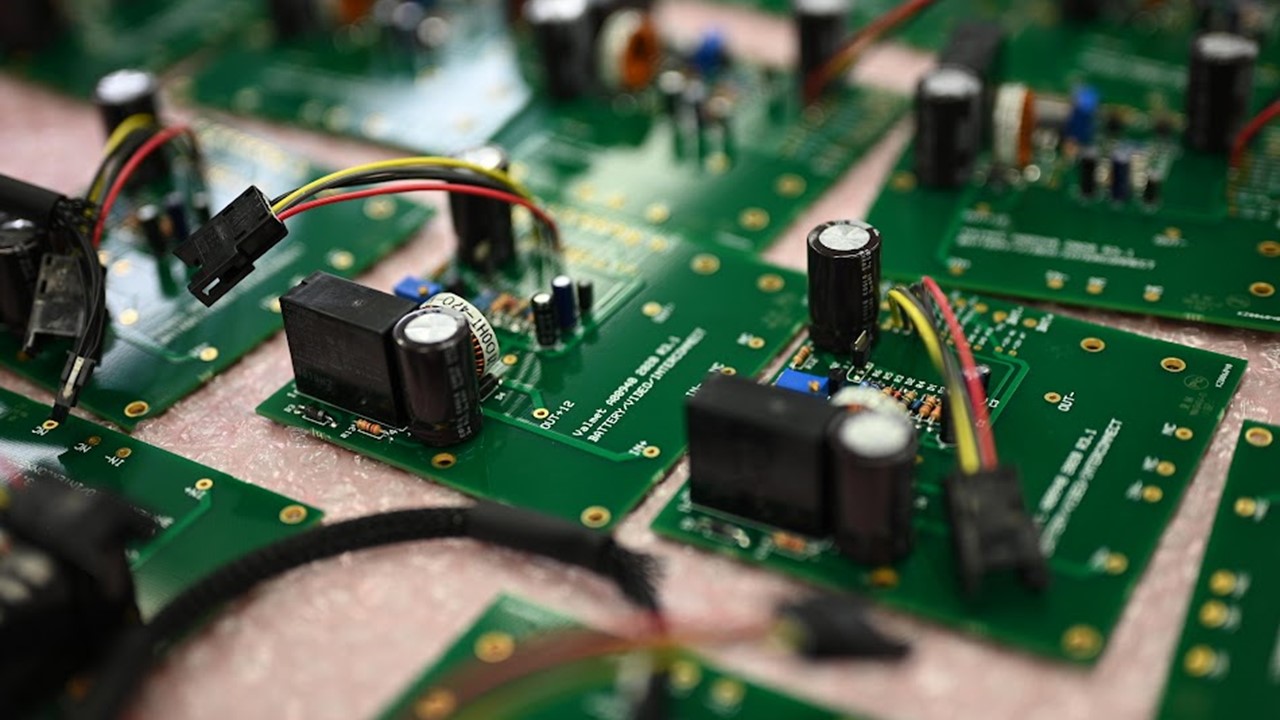
Although signs of slowdown are visible across the manufacturing sector and order volumes remain volatile, electronics manufacturer Jotel has started the year with growth and increased investments in production capacity and quality.
According to Imre Jõgi, Head of Sales and New Product Introduction at Jotel, market conditions have become noticeably more unstable in recent months. “Orders have become shorter-term and customers more cautious, making production planning increasingly challenging. At the same time, demand has not disappeared — quite the opposite. Looking further ahead, we continue to see growth, particularly in the defence, energy, and industrial automation sectors,” said Jõgi.
Production volumes at Jotel’s Tallinn factory grew by 40% in the first quarter of this year. The growth, combined with increasing product complexity, has driven the company to invest further in manufacturing capabilities in order to maintain quality and delivery reliability at higher volumes.
According to Maia Krünvald, Business Operations Manager at Estonian-owned Jotel, the investments are not solely aimed at increasing output. “For us, maintaining quality is critical,” said Krünvald, adding that instead of making one large-scale investment, the company chose to develop the production process as a whole in order to prepare for more complex projects and offer a broader range of services.
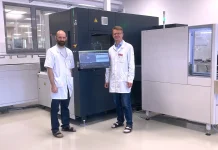
Over the past few months, the company has invested approximately €600,000 in manufacturing equipment. The upgrades include an inline AOI (Automated Optical Inspection) system with conveyors, a laser system, a conformal coating machine, and a new solder paste printer for the PCB production line.
The AOI system enables real-time inspection of all printed circuit boards during the production process, helping identify potential defects at an early stage and reducing the risk of later quality issues and rework.
In addition to manufacturing investments, Jotel has also launched the implementation of the ISO 27001 information security standard, supported by funding from Enterprise Estonia (EIS). The certification process is expected to be completed by the end of this year. This marks an important step in meeting the increasing requirements of both industrial and defence-sector customers.
The company believes that while the electronics industry is likely to remain volatile in the near term, the long-term trend remains positive. “The role of electronics in the economy continues to grow, as an increasing number of devices and systems rely on electronics,” added Jõgi.
Jotel is an electronics manufacturing company with more than 40 years of experience, providing EMS and automation solutions with a specialization in PCB assembly. The company’s Tallinn production unit employs 25 people, and Jotel Estonia’s revenue reached €3 million in 2025. The company operates in industrial automation, energy, infrastructure, safety-critical, ATEX, defence, and dual-use sectors, with approximately 80% of production exported from Estonia.
To learn more, visit www.jotel.com.