Semiconductor manufacturing operates at extraordinary precision. In advanced fabrication processes, temperature stability within fractions of a degree can influence wafer alignment and process consistency. Here, Ben Kitson, head of business development at chemical etching specialist Precision Micro, explains why cooling hardware plays a critical role in semiconductor fabrication and how chemically etched flow plates help maintain stable operating conditions inside these complex systems.
The semiconductor industry itself is vast and still expanding. Recent analysis suggests the global market could reach $1.6 trillion by 2030. Behind those numbers sit fabrication plants that cost many billions of pounds. TSMC, for example, is investing more than $165 billion in semiconductor fabs in Arizona.
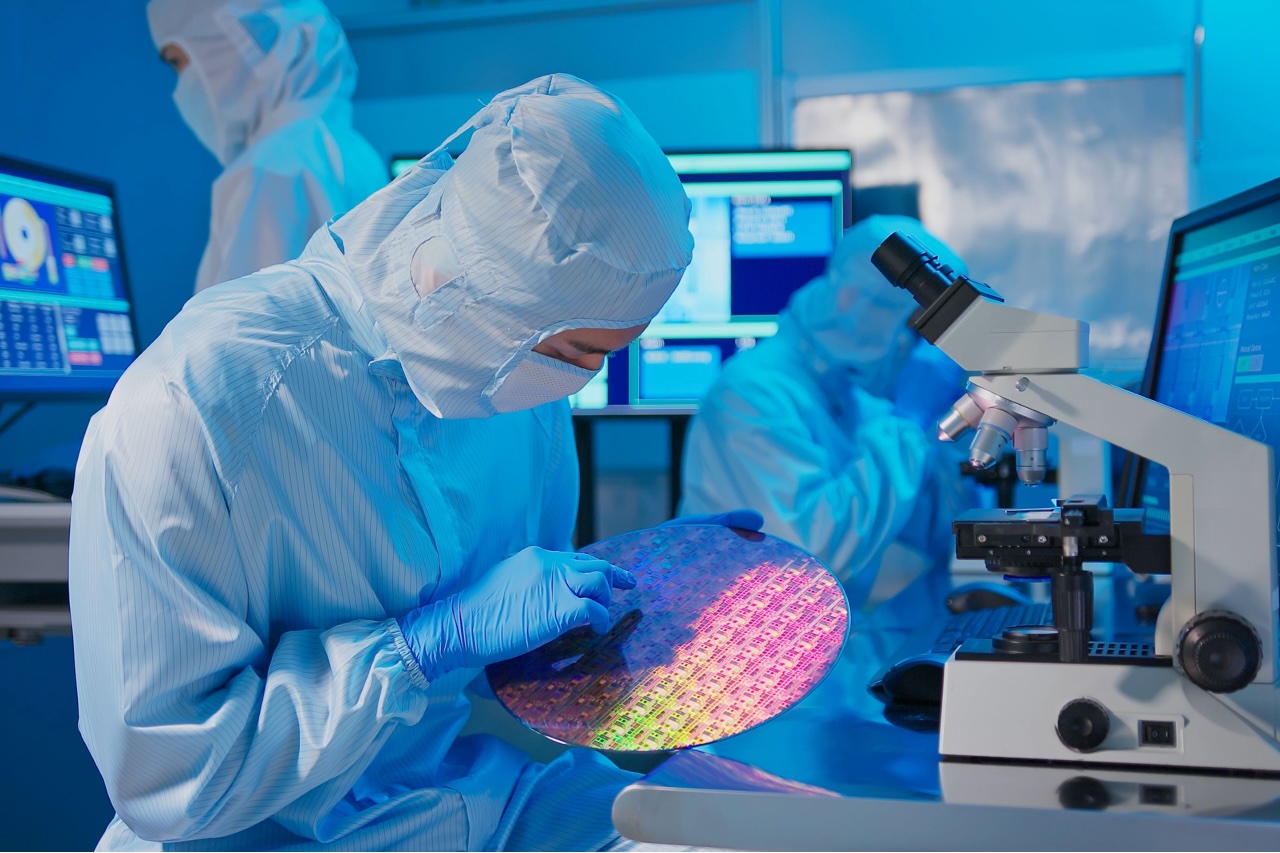
Inside these facilities, silicon wafers pass through specialised process tools that use light, plasma and chemical reactions to build microscopic circuit patterns layer by layer. The structures formed are measured in nanometres. At this scale, heat becomes a serious engineering challenge.
Thermal stability inside fabrication tools
Fabrication equipment generates heat from multiple sources. High power lasers, plasma process chambers and control electronics all contribute to rising temperatures inside the tool. If that heat is not carefully managed, even minor temperature changes can influence the behaviour of materials and the positioning of wafer layers.
The linear motors accelerate extremely fast, at rates of up to 150 metres per second squared. That is comparable to a car accelerating from zero to 100 km/h in just 0.1 seconds. Cooling these motors is extremely important for output and position accuracy.
Cooling systems are therefore an essential part of semiconductor manufacturing. Liquid coolant circulates through the machine, absorbing heat and carrying it away from critical components. Within these systems sit cooling plates and compact heat exchangers that help regulate temperature and keep the equipment operating within tight limits.
At the centre of these assemblies are flow plates containing networks of fluid channels. These channels guide coolant through the system and control how efficiently heat is removed. Their geometry must be extremely consistent as microchannel cooling performance has been shown to depend strongly on precise channel design. Variations in channel size or surface quality can disrupt fluid flow and reduce cooling performance.
Precision manufacturing of flow plates
Producing these plates requires manufacturing methods capable of creating intricate features in thin metal sheets. One approach is photochemical etching, a process that uses light-sensitive masks and chemical solutions to remove material from metal surfaces.
Because the metal is dissolved rather than cut, the process avoids introducing mechanical stress and produces clean channel edges. All features are created simultaneously across the plate, which helps maintain consistent geometry across large production runs.
Microchannels can also be produced using machining or laser techniques. These methods typically create features sequentially and may introduce burrs that require additional finishing. Photochemical etching is often well suited to thin flow plates where repeatability and surface quality are important.
In many semiconductor cooling assemblies, etched flow plates are stacked and brazed together to form compact heat exchangers. These plates are extremely thin and tightly integrated into the system design.
By comparison, the plates used in larger industrial heat exchangers such as printed circuit heat exchangers are much thicker and are diffusion bonded into solid blocks. Flow plates used in semiconductor cooling applications can be only a fraction of that size and thickness.
Producing these components reliably requires careful control of materials and process conditions. Semiconductor equipment manufacturers expect consistent performance from every component within the system. Even small variations in channel geometry can affect cooling efficiency and thermal stability.
The semiconductor industry is often associated with advances in chip design or breakthroughs in lithography, and Intel’s $32 billion investment is a good example of the scale of investment needed to support that progress. Yet the machines that produce those chips depend on a network of supporting technologies working quietly in the background.
Cooling systems are among the most important of these. Within the thermal management systems that support semiconductor fabrication equipment, precision engineered flow plates help maintain stable temperatures while wafers are processed into finished devices.
Without that stability, the precision required for modern semiconductor manufacturing would be difficult to achieve.
Precision Micro is an international chemical etching specialist producing precision metal components for demanding applications across sectors including semiconductors, electronics and energy.