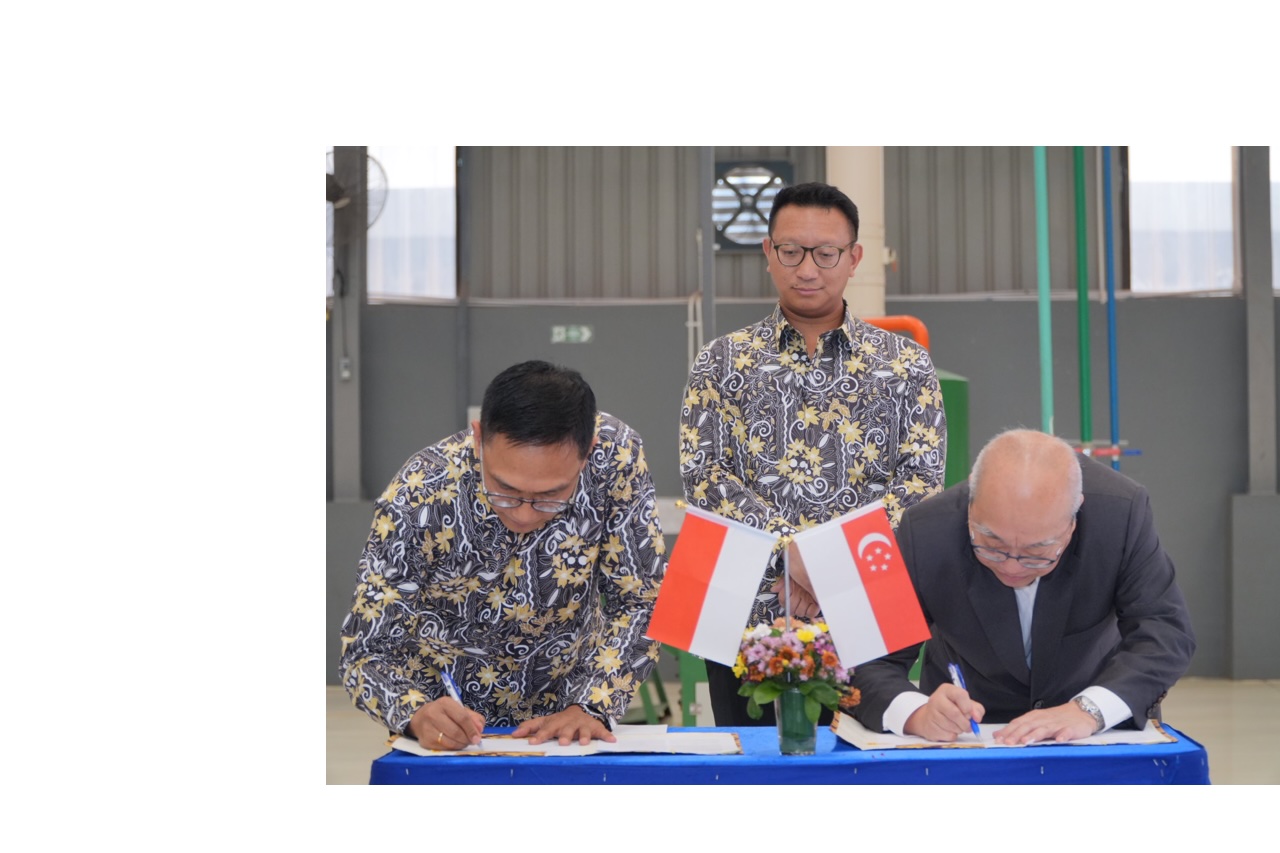
PT Solder Tin Andalan Indonesia (STANIA), a subsidiary of PT Arsari Tambang, and Singapore Asahi Chemical & Solder Industries Pte. Ltd. (Asahi Solder) have signed a Memorandum of Understanding (MoU) to strengthen Indonesia’s tin downstreaming industry through the development of higher-value solder products, enhanced technology and quality capabilities, and expanded market access.
The MoU signing took place at the STANIA factory in Batam under the theme “Strengthening Indonesia’s Downstreaming Industry through Strategic Partnership.”
STANIA is part of PT Arsari Tambang’s integrated tin downstreaming ecosystem, spanning mining through downstream products. The STANIA factory in Batam was inaugurated in July 2025 with an initial production capacity of 2,000 tonnes per year. STANIA currently produces solder bar and continues to develop higher-value solder materials.
Part of a Future Industrial Ecosystem
Aryo P. S. Djojohadikusumo, Chief Executive Officer of PT Arsari Tambang and Deputy CEO and COO of Arsari Group, said the partnership forms part of Arsari Group’s broader vision to build Indonesia’s future industrial ecosystem.
“STANIA is part of Arsari Tambang, which is a sub-holding of Arsari Group. Therefore, today’s partnership is not only about developing solder products but is part of a broader effort to build a value chain connecting natural resources, value-added materials, manufacturing, and the technologies of the future.”
Arsari Group is currently developing a technology and artificial intelligence (AI) ecosystem through RAIA Grid, covering connectivity, fiber networks, data centers, cloud, high-performance computing, and AI. Arsari Group is also preparing to develop GPU assembly capabilities in Indonesia.
According to Aryo, building this ecosystem requires supporting industries and supply chains.
“We want to see Indonesian tin continue to move up the value chain—from a commodity into value-added materials, then connected to electronic manufacturing and ultimately supporting the technology and AI ecosystem being developed in Indonesia.”
Strategic Partnership with Asahi Solder
Asahi Solder is a Singapore-based multinational company with extensive experience in soldering and electronic interconnect materials, with products serving a wide range of applications across the electronics industry.
Vincent Kho, Owner and Director of Singapore Asahi Chemical & Solder Industries Pte. Ltd., welcomed the partnership as an opportunity to combine STANIA’s local manufacturing capabilities with Asahi’s experience and technology.
“We are pleased to establish this strategic partnership with STANIA. Indonesia has significant potential to develop its downstream tin industry, and we believe that combining STANIA’s local manufacturing capabilities with Asahi Solder’s experience in solder products and electronic interconnect materials can create new opportunities for higher-value products and strengthen Indonesia’s participation in the global electronics supply chain.” said Vincent Kho, Owner and Director of Singapore Asahi Chemical & Solder Industries Pte. Ltd.
Through the partnership, the two companies will explore opportunities in product development, technology, quality, and market expansion, including the development of higher-value solder products such as solder paste.
Sustainable Downstreaming
The development of STANIA is also part of PT Arsari Tambang’s commitment to building a more environmentally responsible and sustainable tin industry. The STANIA facility has been developed with a focus on energy efficiency, emissions reduction, and environmental considerations.
For Arsari Group, downstreaming must go hand in hand with innovation and sustainability. This approach is aligned with the agenda of the Government of President Prabowo Subianto to advance downstreaming, investment, and the strengthening of Indonesia’s national industrial base.
The STANIA–Asahi Solder partnership also reflects the increasingly significant role and opportunities for the private sector to invest, build industrial capabilities, create value, and contribute to Indonesia’s economic development.
From Indonesian tin to value-added materials, manufacturing, and the technology ecosystem of the future.