In 2023, manufacturers declared nearly 474,000 electronic components obsolete. This number continues to rise and increasingly shapes long-term risk across industrial, aerospace and automotive programmes. Here, Ross Turnbull, Director of Business Development at ASIC design and supply company Swindon Silicon Systems, explains why ASICs increasingly form part of a sustainable obsolescence mitigation strategy.
Data from Z2Data illustrates that in 2023 “more than 328,100 EOL notices were captured, with some 82,200 of those lifecycle changes occurring without any PCN issued. That’s 25 per cent of all total lifecycle changes,” highlighting how many end-of-life events come with little or no advance notice. Without a product change notification (PCN), manufacturers often have no time to prepare for the change, forcing them to scramble for replacement components, redesign circuits or adjust production schedules at short notice — putting delivery timelines and product reliability at risk.
Understanding the obsolescence crisis
The wider obsolescence challenge reflects a fundamental mismatch between the lifecycles of integrated circuits (ICs) and the operational lifespan of the systems they support. Many chips are designed to last between ten and 15 years, while industrial machinery, aerospace systems and high-value automotive products often have lifespans of 20 to 30 years.
Even designs developed with careful forecasting can lose access to critical components unexpectedly, forcing difficult decisions around redesign, qualification or programme viability.
With hundreds of thousands of parts becoming obsolete within a single year and limited advance warning for many of those changes, reactive responses no longer offer sufficient protection. Obsolescence now represents a systemic exposure that requires deliberate planning supported by technically robust options.
The limitations of standard ICs
Standard off-the-shelf ICs introduce unavoidable constraints within this context. When a chip reaches the end of its production life, the manufacturer may offer a last time buy (LTB), allowing companies to purchase a limited supply of parts. While this can work for products nearing the end of their own lifecycle, it’s not a perfect solution.
Whilst LTBs can provide short-term relief, they require manufacturers to forecast demand years in advance, tying up capital in inventory while risking either shortages or excess stock.
Even sourcing a similar part from another supplier involves several complexities. For example, the new part might not match the original in certain aspects, potentially requiring costly redesigns of other electronic components. In some products, even minor performance changes can have major consequences.
These challenges highlight the need for manufacturers to address obsolescence proactively rather than reactively. Standard ICs are fast becoming inadequate for long-life products.
A strategic solution
When a critical component becomes unavailable, manufacturers need a solution that addresses both immediate production requirements and long-term supply continuity. Application specific integrated circuits, or ASICs, provide a robust alternative to standard ICs for manufacturers facing this crisis.
This approach ensures that production can continue without being constrained by the availability of off-the-shelf ICs. One of the key benefits of ASICs is their flexibility across multiple applications. A single custom design can be adapted to support different products, reducing the risk of obsolescence across a manufacturer’s portfolio.
As ASICs are designed specifically for the application they will support, designers can replicate the functions of an obsolete component or surpass its performance. In addition to supporting obsolescence recovery, ASICs deliver a host of benefits for manufacturers, including higher performance, lower power consumption, a smaller footprint, a reduced bill of materials and improved reliability.
They also offer enhanced intellectual property (IP) security, as the circuits are much harder to reverse-engineer, making them particularly valuable for manufacturers and end users that must comply with cybersecurity or functional safety standards.
Swindon Silicon Systems has more than 50 years of experience designing ASICs for industrial, aerospace and automotive sectors, helping manufacturers replace obsolete components while maintaining long-term product support.
Planning for long-term resilience
Obsolescence is a continual challenge that cannot be addressed as a one-off problem. But manufacturers facing it today need more than a long-term plan — they need a solution that protects build schedules and service commitments now. When combined with a proactive lifecycle management strategy, ASICs can significantly reduce long-term obsolescence risk.
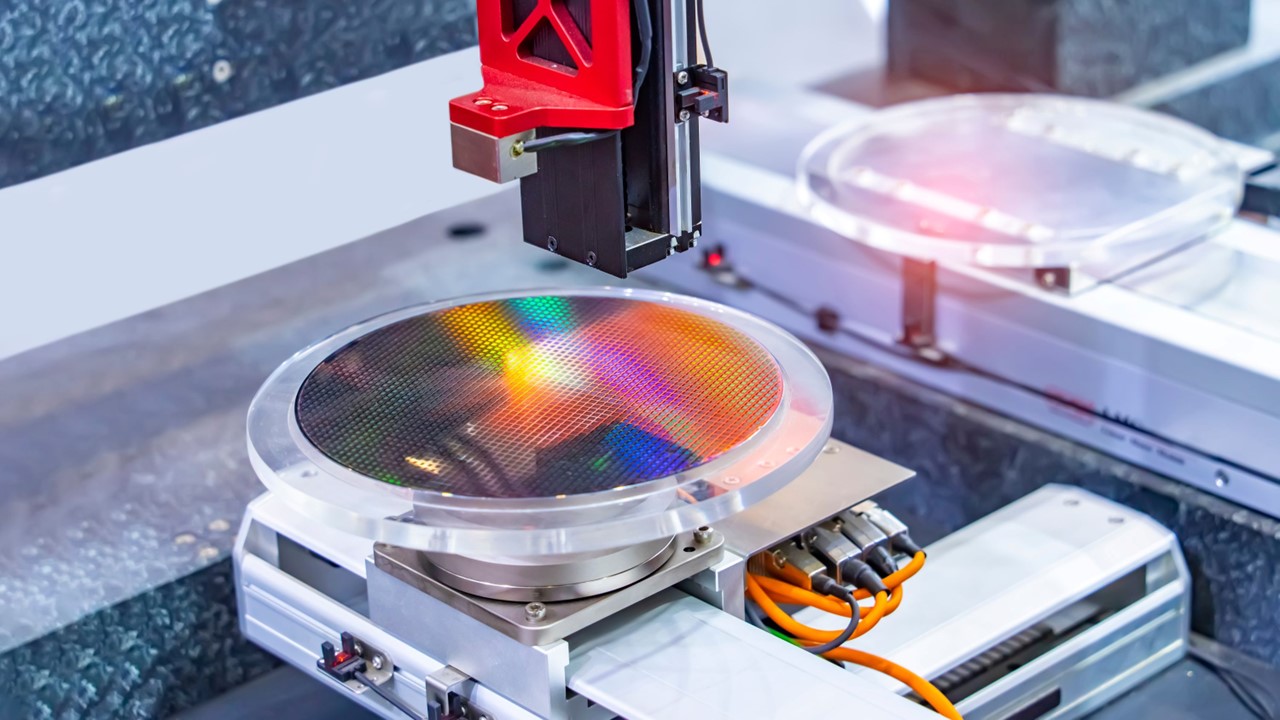
With the right support, obsolescence can be actively managed. Several methods are used to provide long-term availability, including storing wafers in dry nitrogen for up to 25 years or porting the chip design onto a modernised process. By combining custom design with careful lifecycle management, Swindon Silicon helps manufacturers maintain production continuity while futureproofing their products.
As component lifecycles continue to shorten and supply chain uncertainty grows, manufacturers are increasingly turning to ASICs as part of a broader strategy for managing obsolescence and ensuring long-term product availability. To learn more about how ASICs can support long-life products and long-term obsolescence management, visit Swindon Silicon Systems.