
The pressure on electronics manufacturers to reduce defect rates while accelerating throughput has never been greater. Whether you’re building consumer electronics, medical devices, or industrial control systems, the cost of a defective PCB reaching the field is simply too high, in warranty costs, brand damage, and in some sectors, human safety. Automated Optical Inspection has been a staple of the SMT line for years, but the shift from 2D to 3D AOI represents a step change in what’s actually detectable, and manufacturers who haven’t made the move are increasingly at a competitive disadvantage.
The Limitations of 2D AOI
Traditional 2D AOI systems work by capturing a flat image of the board and comparing it to a reference. They’re effective at catching obvious defects, missing components, wrong polarity, visible solder bridges, but they struggle where modern boards need them most. As component density increases, packages get smaller, and miniaturised connectors become the norm, 2D systems begin to miss defects that are simply invisible from directly above. Insufficient solder volume, component lift (where one end of a component rises off the pad), and subtle coplanarity issues all fall into blind spots that 2D simply cannot address.
What 3D AOI Changes
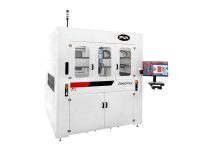
3D AOI systems use structured light, multi-angle cameras, and phase-shifting technology to build a genuine three-dimensional model of every solder joint and component on the board. This means the system isn’t just asking “is there solder?”, it’s measuring solder volume, joint height, coplanarity, and fillet shape against precise, configurable thresholds.
The practical result is a dramatic reduction in both false calls and escaped defects. False calls are a significant hidden cost in many SMT operations, every board pulled for manual re-inspection ties up skilled operator time and risks introducing new handling damage. With 3D measurement, the system can confidently pass joints that a 2D system would flag as marginal, while catching real defects that 2D would miss entirely.
Integration with the Production Line
Modern 3D AOI systems are designed to be line-integrated rather than standalone inspection stations. They connect to your SPC system, feeding measurement data back upstream to the printer and placement machines, enabling closed-loop process control. Spot a trend of insufficient solder on a particular pad? The data feeds directly to the printer for automatic offset correction before the problem becomes a defect rate.
This kind of feedback loop is central to the Industry 4.0 vision, not just catching defects, but using inspection data to eliminate the root causes of defects in real time.
Omron’s Approach
Omron has established itself as one of the leading names in inspection technology for the electronics manufacturing sector. Their 3D AOI platforms combine high-speed throughput with sub-micron measurement accuracy, and are designed to handle everything from standard SMD assemblies to the most demanding high-density packages including BGAs, QFNs, and 01005 components.
UK and European manufacturers can access Omron’s 3D AOI range through Etek Europe, the dedicated UK and Europe distributor. Full specifications, system comparisons, and application support are available via the 3D AOI systems from Omron page, or by contacting the Etek Europe team directly at sales@etek-europe.com.
As component miniaturisation continues and quality expectations rise across every vertical, 3D AOI is transitioning from a premium option to a baseline requirement. The question for most manufacturers is no longer whether to upgrade, it’s when.